|
|
|
|
|
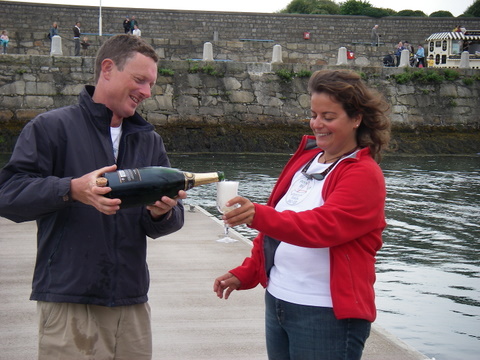
We arrived in Prickly Bay, Grenada on Sunday 1 April
after a 30 day passage from St Helena to the
Caribbean.
Our arrival in Grenada marks the completion of our
circumnavigation.





 |
We stayed a week in St. Helena, climbed the 700
steps of Jacobs ladder, saw the Napoleonic sites and
did several walks in the hills and forests.
Important in its day as a staging
post for provisions in days of sailing
ships, then coal for steam ships, and later as
a base for transatlantic phone cables, the
island now has little of its strategic importance
but is still unique for it's beauty, history and the
wonderful welcome that is extended to the few that
visit.
We arrived in Richard's Bay, South Africa, in
early November. We spent most of December/January
waiting for favourable weather in order to sail
around the coast from Durban to Cape Town. We
took advantage of this to explore the country
by land, incl. a hiking trip to the Drakensberg
Mountains, a safari in the Hluhluwe-Imfolozi Game
Reserve and a short road trip along the Cape
Peninsula. Although we were struck by the beauty of
South Africa and by the great variety in
landscape, culture and ethnicity between various
regions and greatly enjoyed our time here we are now
excited about our next long voyage from SA to the
Caribbean via St Helena.
The islands off Madagascar's North-West coast proved
to be our favourite destination of this season.
In particular the area around Nosy Be is a sailor's
dream: a cruising ground with reliable winds, short
passages between the many beautiful islands, some
spectacular anchorages, fantastic food and colourful
markets. Here we caught up with our friends
Eaglewing & Petrel and spent a few happy weeks
cruising in company with their gang.
Chagos is an island group that marked the middle of
our Indian Ocean passage. It has the reputation
of an island paradise, as it is remote and
uninhabited. Amongst sailors, Chagos is famous for
being home to an almost permanent community of
cruisers with some yachts staying more than a year.
We were very taken by the beauty of the islands, the
clarity of the water and the abundance of marine
life. Although we couldn't see ourselves
staying here for months - let alone years - we
greatly enjoyed our two weeks of days filled with
fishing, snorkeling, swimming and the almost nightly
bbqs ashore with friends.
Cocos Keeling is a typical atoll with a ring of
small islands formed of coral beaches and
palms that surround a lagoon. At the entrance to the
lagoon the depth changes from ocean depths to tens
of meters very quickly, with dramatic changes in the
water colour. A highlight of our stay was swimming
across The Rip, a pass were currents driven by the
trade winds push into the lagoon, and onto the
shallow reef that provided the best snorkeling we
have ever experienced with an abundance of reef fish
and some very colourful coral.
Most accounts of Christmas Island mention the
Phosphate works which dominate the anchorage, but
fail to mention the fantastic scenery and wildlife
on the island and the very welcoming island
populations which consists of Chinese, Malay and
Australians. We rented a car and took in some of the
sites (the island is less than 9 miles square).
After 26 days at sea, we enjoyed all the island had
to offer: well stocked supermarkets,
laundrettes, free hot showers, an open air cinema,
and several ethnic restaurants.
We spent two days in the capital of Vanuatu, Port
Vila after an overnight sail from Tanna. It's an
interesting, bustling place with a very sheltered
anchorage right off the town. From Port Vila
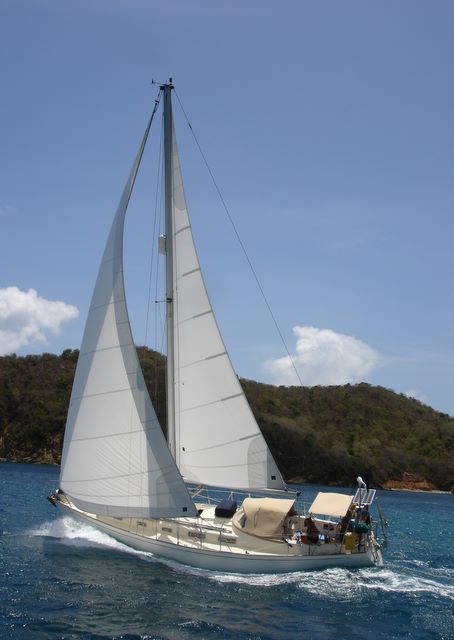
we left on what turned out to be our longest passage
so far: 3882 miles in just over 26 days. We
considered stopping at several places along the way
(Port Moresby, Thursday Island, Darwin, Ashmore
Reef) but in the end to keep going as
conditions were good. We have included photos from
the passage here.
8 days from Opua, we arrived in the beautiful island
of Tanna, in southern Vanuatu. We spent a very
enjoyable few days here, met lots of the local
people, saw the volcano and were invited to a
circumcision ceremony. After Tanna, we went north to
Port Vila from where we will head for the Torres
Strait.
Henrietta's sister Erika and her boyfriend Markus
flew out to NZ in February for a three week visit.
Together we traveled some 3000km by car. After a few
days in Auckland, we first headed north taking
in Northland and the Bay of Islands, before driving
south to explore the central North Island.
After an enjoyable nine day passage from Neiafu,
Vava'u, we arrived in NZ just after midnight on 26th
October. Our goal for the season achieved! The plan
had been to get to NZ before the nominal start of
the southern hemisphere hurricane season in
November.
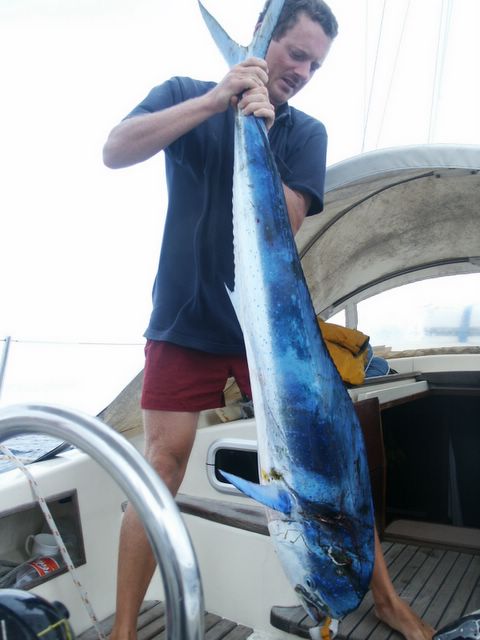
One the way into Tonga we caught one of our biggest
fish, a 20kg dorado. The day after arriving we
entered an informal harbour race, and came third -
winning a introductory scuba dive. We spent about
two and a half weeks in Tonga and really enjoyed it,
but left earlier than intended to catch a favourable
weather window for the often tricky trip to NZ. We
hope to return to Tonga some day, as it is one of
the most beautiful places we've been. They may have
been called "the Friendly Islands" due to
misunderstanding by Capt. Cook, be we also found
them to be just that.
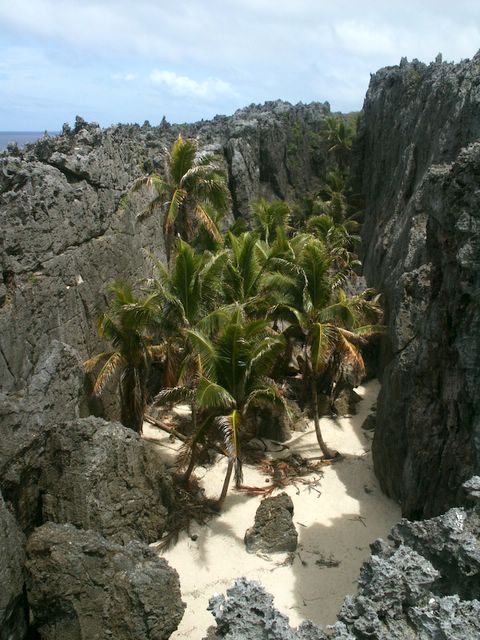
Known as 'the rock', Nuie is one of the largest
coral islands in the world. It is also the smallest
nation state, with a population of about 2000
citizens. When we got arrived, Nuie was still
recovering from the effects of a large cyclone which
had hit earlier that year. (images now archived)
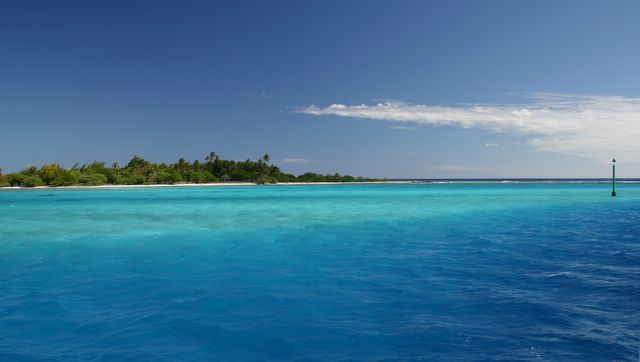
This island was our only stop in the Cooks and is a
large atoll with a population of about 50 people.
Very beautiful and isolated, it was one of the
highlights of our Pacific trip. The islanders are
incredibly hospitable and amazing fishermen who
enjoy hosting visitors, allowing them to share their
ways of life. On our last night there we were woken
by a group of whales 'blowing' as they swam through
the anchorage.
The most cosmopolitan part of French Polynesia, this
is a group of about six or so principal islands,
including the famous islands of Bora Bora and
Tahiti. The town of Papeete is the biggest town for
about 4000miles and we enjoyed it's bustle, a real
contrast to the ruggedness of the Marquesas
and the remoteness of the Tuamotus.
An extensive group of coral atolls, the Tuamotus are
part of French Polynesia and lie between the
Marquesas and the Societies. The atolls are sparsely
inhabited, remote and very beautiful. We visited
three atolls - Ahe, Apataki and Toau.
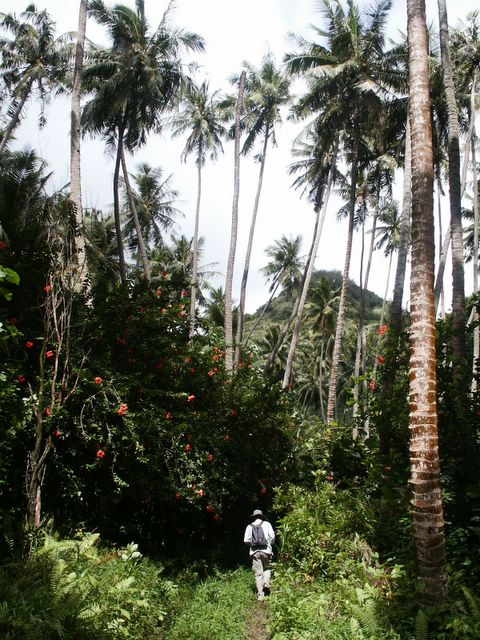
These islands are high, volcanic, fertile and
dramatically beautiful. Our landfall in French
Polynesia was the eastmost of the islands - Fatu
Hiva. We arrived in 'the bay of virgins', which is
the the most stunning anchorage we've been in.
3 weeks in the Galapagos - and we could have spent
months there. The famous wildlife is all around. Sea
lions, penguins, pelicans, iguana, turtles, sharks
and rays - and that is just in the anchorages.
Ashore, we also saw the giant tortoises, albatross,
blue-footed boobies and much more.
Neither the bureaucracy nor the transit of the canal
are as painful as the rumours we had heard
suggested. It takes about a week to organise as the
system is really set up for ships rather than
yachts, but it is not difficult. It is a great day
out - with some anxious moments - as you first rise
into the Gatun Lake via 3 locks, travel for about 25
miles through a flooded jungle, and then descend
into the Pacific. (images now archived)
|
|
|
|

 ``
``